Which certificates should come with machined parts?
Ask for three documents, and write them into the RFQ. A certificate of conformity says the parts match your order and drawing. An EN 10204 3.1 material certificate shows test results for the metal they were cut from, provided the shop can tie that metal to your parts. A dimensional report shows the features you care about were actually measured. Each one proves something the others do not.
An ISO 9001 certificate proves none of this. As the guide to certificate scope explains, it covers the supplier's quality system. The paperwork below covers the batch in your hands.
What does each document prove?
Each covers a different question about the part. Pick by what a wrong part would cost you.
| Document | What it proves | What it does not prove | Ask for it when |
|---|---|---|---|
| Certificate of conformity (CoC) | The supplier states the parts meet your order and drawing | Any measured value; it is a signed statement | Every order |
| EN 10204 2.2 test report | Typical test results for that grade from the maker's routine testing | That your batch was tested | The grade matters, but a mix-up would not cause a failure |
| EN 10204 3.1 inspection certificate | Chemistry and mechanical results from the actual batch, signed by an inspector independent of production | Anything about machining or dimensions | Strength, corrosion or pressure depends on the grade, or your customer asks for traceability |
| Dimensional report (manual, CMM or first-article) | Named features were measured, with results against tolerance | Material, or parts that were not measured | Features locate, seal or mate, or the part goes into series production |
EN 10204 also has a 2.1 (a compliance statement with no results) and a 3.2, where an inspector from the buyer or a third party co-signs the results. Ask for a 3.2 only when a code or your customer requires it, because it needs that inspector to take part, which adds cost and time.
Why might a 3.1 certificate not be about your part?
Because the mill tested the bar, not your part. The certificate carries a heat number, and it only covers your parts if that heat number follows the material through the shop: marked on the stock, recorded when it is cut, and listed on the CoC. If the offcut rack mixes bars, the certificate describes some metal that was in the building.
Material Welding's summary of EN 10204 puts the rule simply:
"The Heat Number on the MTC must match the heat number marked on the physical material." Material Welding, Material Test Certificates Explained
A stockist in the middle may pass on copies, but EN 10204 says it must not alter the mill's document. So ask for the mill's original certificate, and ask the shop to put the heat number on the CoC. A certificate requested after delivery is only useful if that link was recorded when the bar was cut.
The most common mistake is accepting a 2.2 when you needed a 3.1. Both look like a table of test results. Only the 3.1 comes from your batch.
How many parts get measured?
Fewer than most buyers assume, unless you say. MakerVerse, which sells inspection reports with parts, states that without a quality control plan its inspections are done on "one randomly selected piece per batch". That is a normal default, and it may not be what you need.
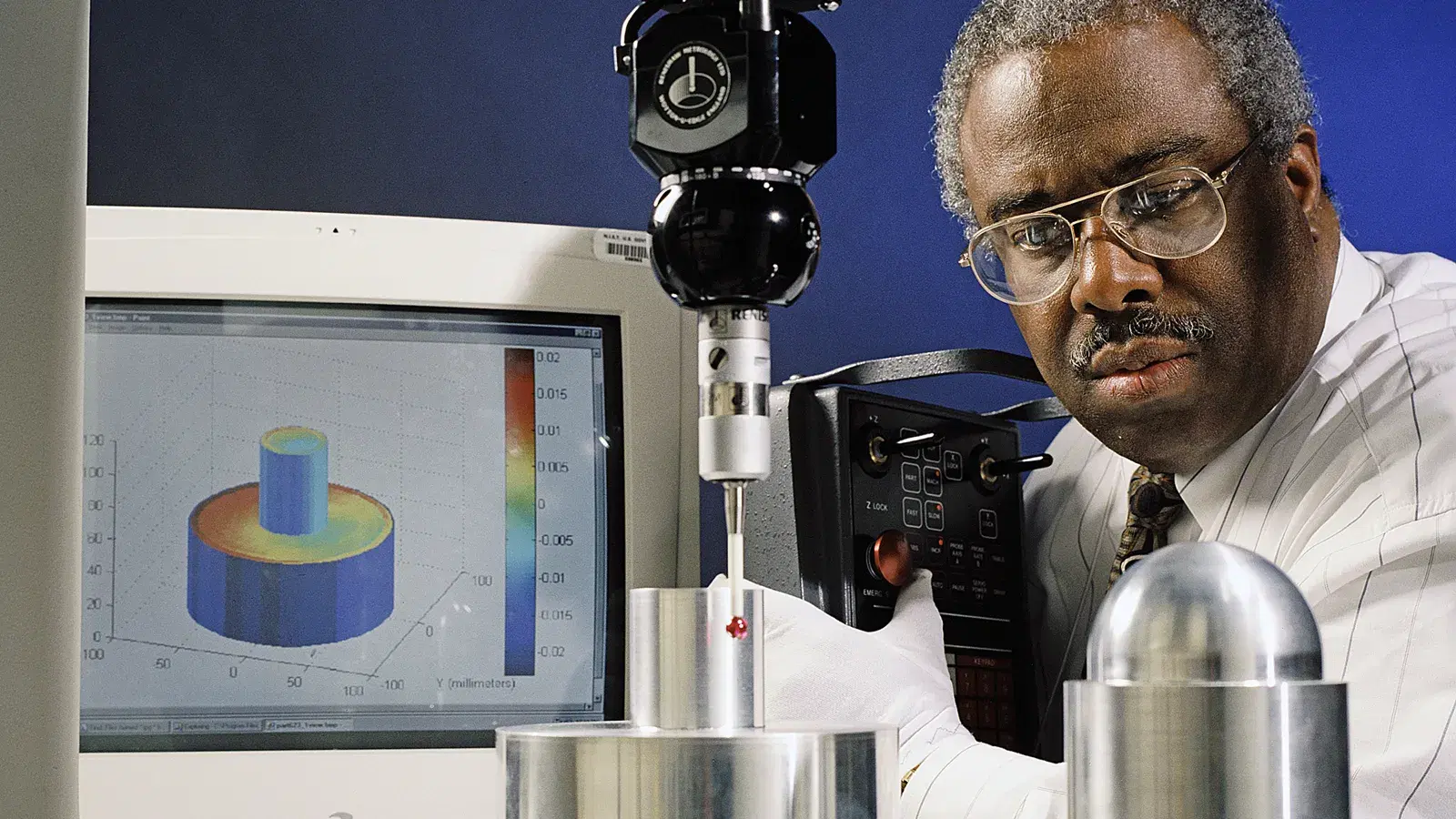
So name three things: the features to report (the ones that locate, seal or mate, as in the RFQ checklist), how many parts to measure, and the method if it matters. A CMM report suits tight geometric tolerances. A first-article inspection report, which checks every dimension on the first part, suits a part going into repeat production.
Does asking for paperwork add much to the price?
Usually not, if you ask at quote time. Weerg, an online CNC service, lists its prices openly: a material certificate (3.1 for steel and aluminium, 2.2 for other materials) at €10 per order, a certificate of conformity at €10, and a measurement certificate at €90 plus €6 for each dimension measured. Other shops will price differently, but the pattern holds. Paperwork planned in costs little. Paperwork asked for after shipping may need parts sent back to be measured, or may be impossible if the heat number was never recorded.
Add one line to your RFQ: "Supply with a CoC stating the heat number, the mill's EN 10204 3.1 certificate, and a dimensional report on features A, B and C for [n] parts." Then send your drawing to Vesprr Workshop with that line. The quote will state which documents come with the parts.
Sources
- Material Test Certificates Explained: 2.1, 2.2, 3.1 and 3.2, Material Welding: EN 10204:2004 types, specific and non-specific inspection, the stockist rule, the heat-number match.
- EN 10204 2.1 vs 2.2 vs 3.1 vs 3.2, Project Materials: who signs each type, and 3.2 co-signed by an independent inspector.
- Manufacturing Certifications and Inspection Reports, MakerVerse: certificate and inspection-report options, and one random piece per batch without a quality control plan.
- CNC certifications, Weerg: material, conformity and measurement certificate prices.
- Coordinate Measuring Machines, National Institute of Standards and Technology, public domain, via Wikimedia Commons (header photo).
- Earlier on this site: ISO 9001 certificate scope: does it cover your part?
.jpg)