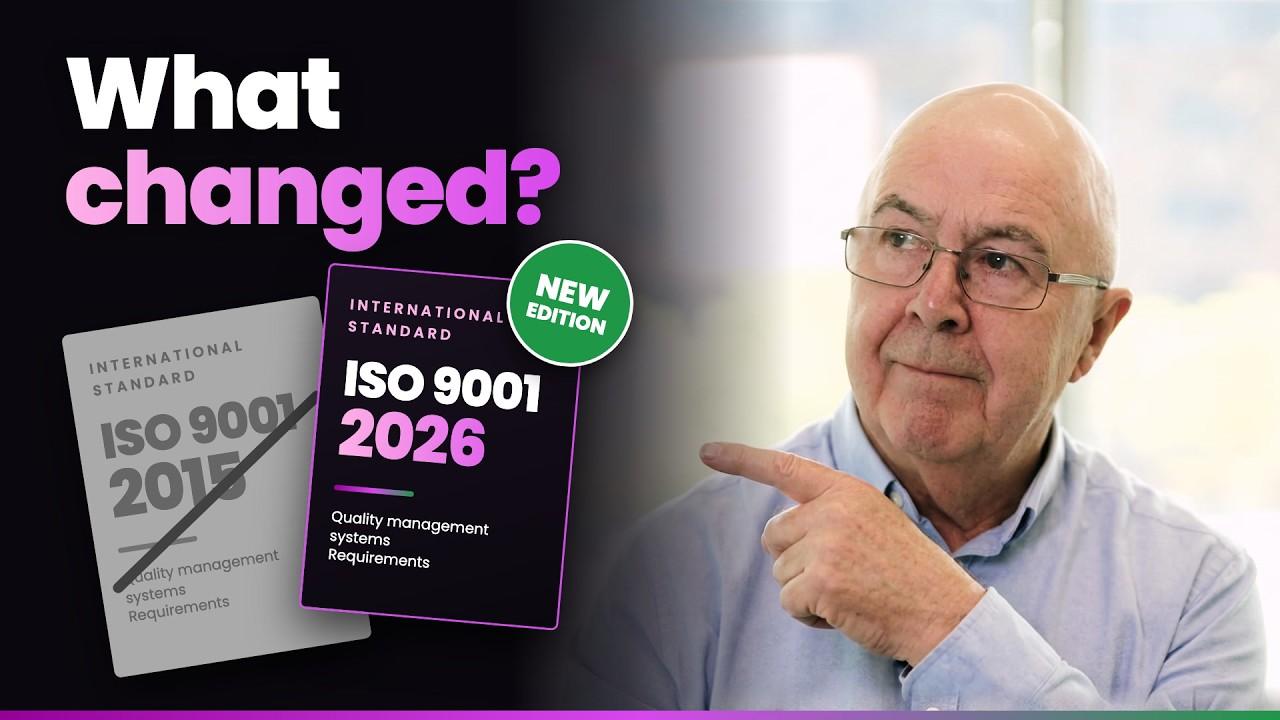
ISO 9001:2026 transition: why 15 September 2029 is the wrong date to plan around, and the three things to read off a supplier's certificate now
The explainer videos on ISO 9001:2026 have settled on a date: September 2029, when your ISO 9001:2015 certificate stops being valid. The date is right. TÜV SÜD's own ISO 9001 page gives it as 15 September 2029, three years from publication. It is also the least useful date in the story. The audit that changes your shop is not the one in 2029; it is the next surveillance audit after your certifier starts auditing to the new edition, and for most Pakistani shops that is 2027.
Here is what the two primary documents actually say. ISO's release of 16 September: the new edition "places greater emphasis on leadership, a culture of quality and ethical behaviour," gives "greater clarity on the consideration of risks and opportunities," adds "a new section" on the intent of the requirements, adopts the Harmonized Structure shared with the other management-system standards, and will be sold as "digitally enhanced content" from 1 October. No clause numbers are quoted in the release, and I have not bought the text, so I quote none.
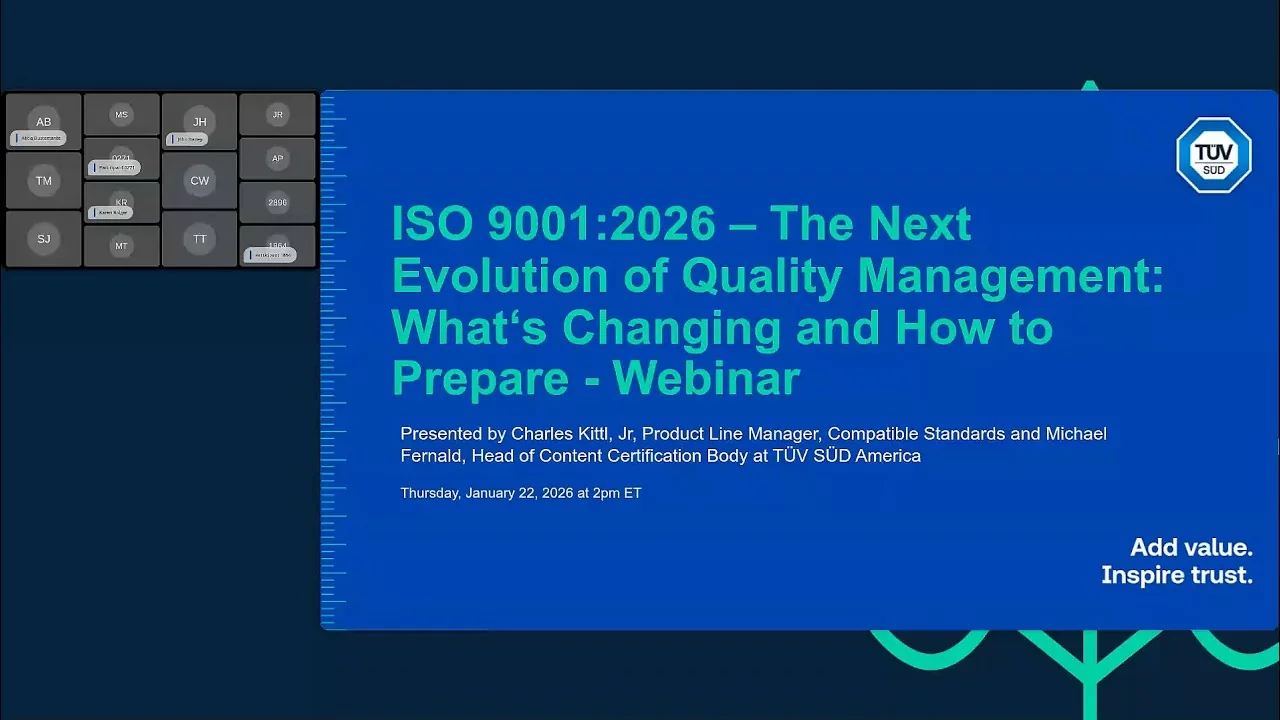
TÜV SÜD, as a certifier, lists what gets "greater prominence" in plainer words: "a culture of quality, ethical behavior, opportunity-oriented thinking, robust change management, and climate change." On the last one it makes a point the videos miss: the climate-risk amendment of February 2024 was written into the Harmonized Structure without a revision and is "already assessed in ISO 9001 audits today." If your 2025 audit did not ask about it, your next one will, edition or no edition.
"Culture" is the word to act on. A 2015 audit could be passed with a quality manual and a risk register. A culture cannot be shown on paper; it is shown by the auditor asking the operator on the second CNC what happens when a part is out of tolerance, and getting the answer the manual gives. That is a training job, and training takes longer than a document refresh. Book the gap review with your certifier this quarter and ask for its transition audit fee and its earliest 2026-edition audit date in writing; I will not invent a figure for either.
On the buying side, the 6 September RFQ post put the certificate first in the pack. From this month a supplier's certificate needs three things read off it, not one:
- Edition. 2015 is valid until the transition ends. If a supplier shows a 2026 certificate this year, ask which accreditation body approved its certifier for the new edition, and when. I have not seen such an approval announced; that does not mean none exists, it means the question has to be asked.
- Expiry. A three-year certificate issued this autumn carries a printed expiry after 15 September 2029. The printed date does not extend the transition. On the day the transition ends, the 2015 certificate stops, whatever it says.
- Accreditation. The mark of the accreditation body, PNAC for a Pakistani certifier, and for a Chinese or Taiwanese factory the national body named on the certificate. Check the certifier is on that body's list. A certificate with no accreditation mark is a certificate from nobody.
My prediction, and it is mine: the large certifiers will be running accredited audits to the 2026 edition by the end of the first quarter of 2027, and a Pakistani shop whose surveillance audit falls after 30 June 2027 will be audited to 2026 whether it asked for it or not. The reasoning is cost: a certifier running two editions in parallel through 2029 is paying for two auditor pools and two sets of checklists, and the 2015 transition went the same way. If your certifier's 2027 audit plan still says 2015, I was wrong and you have a year more than I think.
Sources
- ISO launches update to world's most widely used quality management standard for a new era of business, ISO, Geneva, 16 September 2026.
- ISO 9001 certification: the revised ISO 9001:2026 standard has been published, TÜV SÜD, service page updated after 16 September 2026.
- ISO 9001:2026 Is Here: The Key Changes Explained, REAS, YouTube.
- ISO 9001:2026 Explained: Key Changes, Risks, and Preparation Steps | Webinar, TÜV SÜD, YouTube.
- ISO 9001:2026: 3 Changes No One Is Talking About, QMS Certification, YouTube.
- ISO FDIS: Unpacked | ISO 9001:2026, DAGMA Inc., YouTube.
- Earlier on this site: What to send with a machining RFQ so the quote comes back right (6 September).