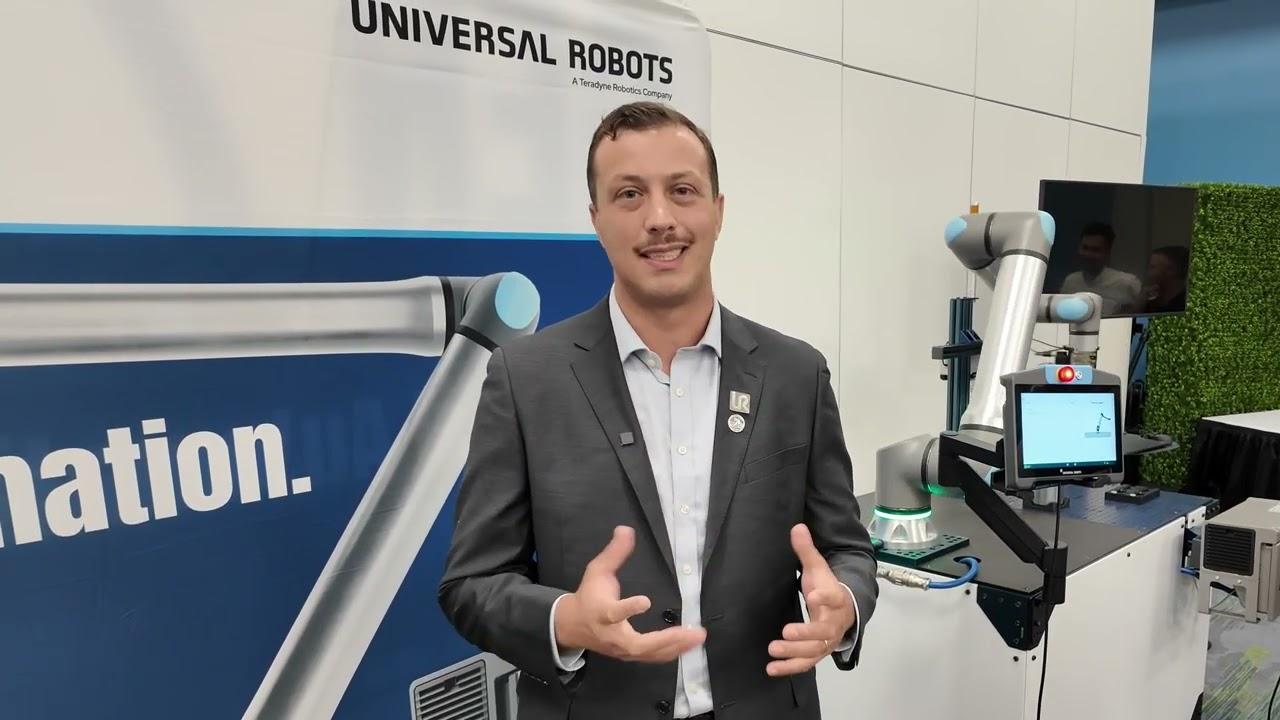
Universal Robots Gen 7 explained for a Pakistani shop: the camera moves to the wrist, the vision PC leaves the shelf, and there is still no price - five questions before you sign for a cobot cell
Two in the morning, night shift, the cobot cell stops. Not the arm. The vision PC on the shelf next to it lost its Ethernet link, the camera on the wrist has nothing to talk to, and the operator is looking at a controller that says everything is fine. Anyone who has run a bolt-on vision cell knows that shelf. It is the thing Universal Robots says it has removed.
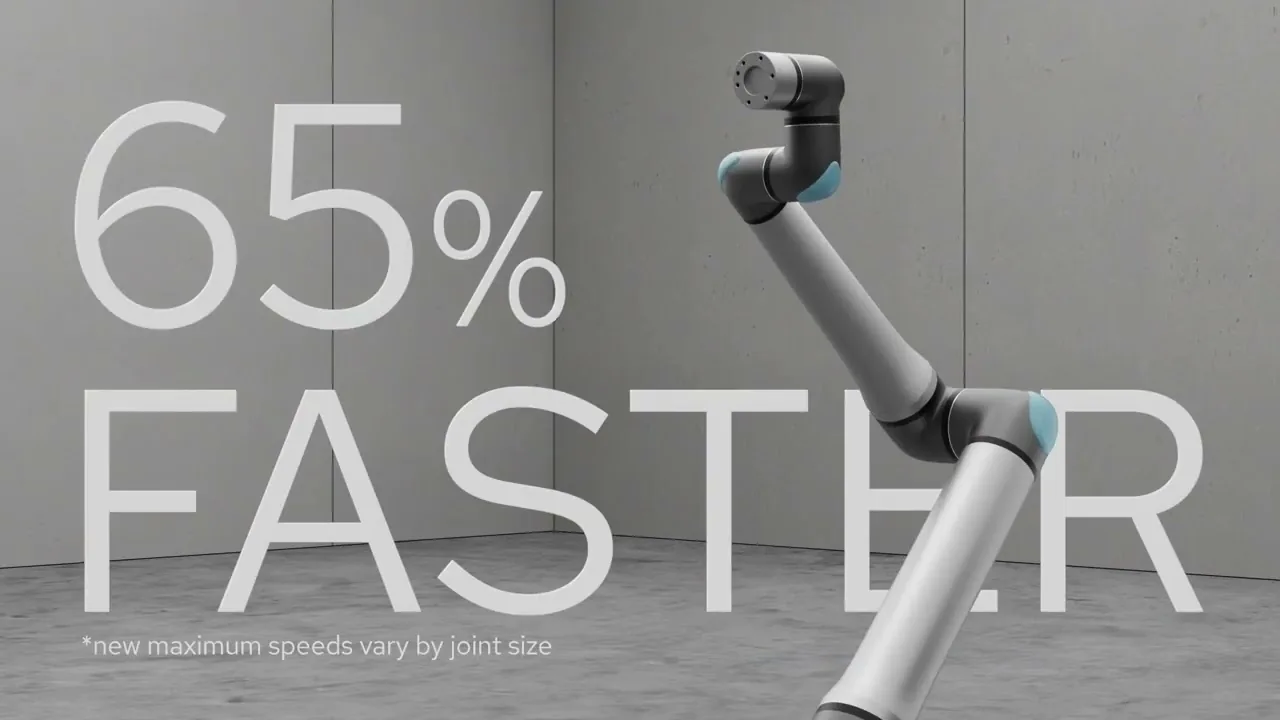
On 14 September at IMTS, UR launched Gen 7: three new arms, a new controller, a new pendant and a new tool flange. The arm names tell you the spec. UR10g-1750, UR17g-1300, UR18g-950: payload in kilograms, reach in millimetres. The flange carries power, data and safety out to the tool, so a camera or a force sensor plugs in at the wrist with no cable run back down the arm. Force-torque sensing is built in, not bolted on. And Inbolt's 3D vision now runs on the UR controller itself. Rudy Cohen, Inbolt's CEO, in the release: "No external vision PC, no extra cabling."
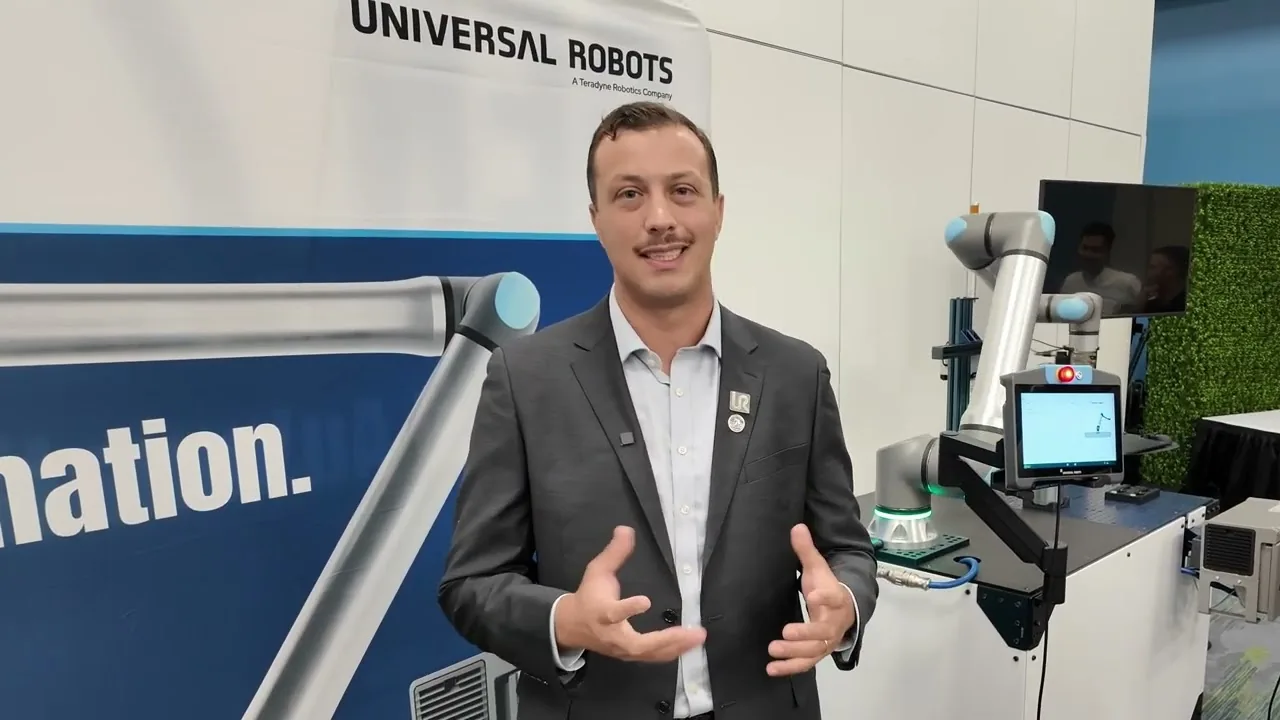
That is the shelf gone. Will Healy of UR told The Robot Report why: "nearly every application in robotics is moving towards having a camera at the wrist." He is right. Every tending, welding or deburring cell I have seen quoted in the last two years had a camera somewhere on the arm and a PC somewhere else, and the PC was where it broke.
The controller is the other half. CB7 Core has 40 per cent more compute in a 30 per cent smaller box, a managed Ethernet switch inside it so the PLC, the HMI and the MES connect without an external switch, and it comes in a standalone version or one that bolts into a cabinet. The line that matters most for a shop that already has a UR: CB7 is compatible with the existing e-Series and UR Series arms. Your UR10e is not obsolete. Its control box is.
Now the part the release does not have. No price. No ship date. No repeatability figure, no cycle time.
FANUC's welding agent, which this site read on 11 September, at least ships in December. UR gives you a platform and a partner list and tells you to call an integrator.
So call one, and take this list with you. It is what I would want answered before a Taxila shop puts a deposit on a welding or tending cell in 2027.
- Weigh the tool first. Torch, cable package, wire feeder if it hangs on the arm, the camera, the sensor. The 10 kg arm gives you 1,750 mm of reach; the 18 kg arm gives you 950. That is the trade. If your fixture table is 1.2 metres across and your tooling is over 10 kg, neither of the two extremes fits and you are looking at the UR17g-1300, so quote that one, not the cheapest.
- Ask for the two certificates by number. PLd, Category 3 to ISO 13849-1 for the safety architecture, and the TÜV certificate to ISO 10218-1 on the arm. Both are in the release. If the integrator cannot put the paper on the table, it is not a Gen 7 cell.
- Ask who signs for the network. Teradyne Robotics is certified to IEC 62443-4-1 for secure development. That covers UR's code. It does not cover the integrator's PLC program, the vision app, or the port somebody opens so the vendor can log in remotely. Get in writing which of those the integrator owns.
- Ask for the retrofit price separately. If you already own an e-Series arm, a CB7 and PolyScope X on the old arm is a different purchase from a g-Series cell. Make them quote both.
- Do not accept a spec sheet with no repeatability number. UR did not publish one on 14 September. The integrator has to.
Where I stand on it. Between FANUC's December date and UR's no-date, and with the CB7 box working on arms people already own, I expect the first Gen 7 hardware in a Pakistani shop to be a controller swap on an existing UR, not a new g-Series arm, and I expect FANUC's welding agent to be demonstrated in Pakistan before a g-Series arm runs production here. Put a date on it: end of March 2027. If a UR10g is welding parts in Taxila or Karachi before then, I read the release wrong.
Hathout's number in the release is 100,000 industrial deployments. Most of them have a PC on a shelf. The interesting question for the next year is not what the new arm costs. It is what the box costs, because that is the part that fails at two in the morning.
Sources
- Universal Robots unveils Gen 7, a new platform for industrial automation and physical AI deployment, Universal Robots, Chicago, 14 September 2026 (arm names, flange, CB7, certificates, Cohen and Hathout quotes)
- Universal Robots launches its seventh-generation robot platform at IMTS, The Robot Report, 14 September 2026 (Will Healy quotes)
- Universal Robots Unveils Gen 7 Robots at IMTS 2026, SME Media (YouTube; image)
- Universal Robots Gen 7 Review: AI-Ready Cobots & More | AI News Daily (15 Sept 2026), Ai2day (YouTube; image)
- UR20 - Universal Robots' next generation of industrial cobots for heavy handling tasks, RARUK Automation Ltd (YouTube; image)
- UBTECH Roboterfabrik: 10-Minuten-Takt & UR Gen 7 | 15. September, The State of Tech, deutsche Ausgabe (YouTube; image)
- Earlier on this site: FANUC's AI Welding Agent reads the drawing and writes the weld (11 September)