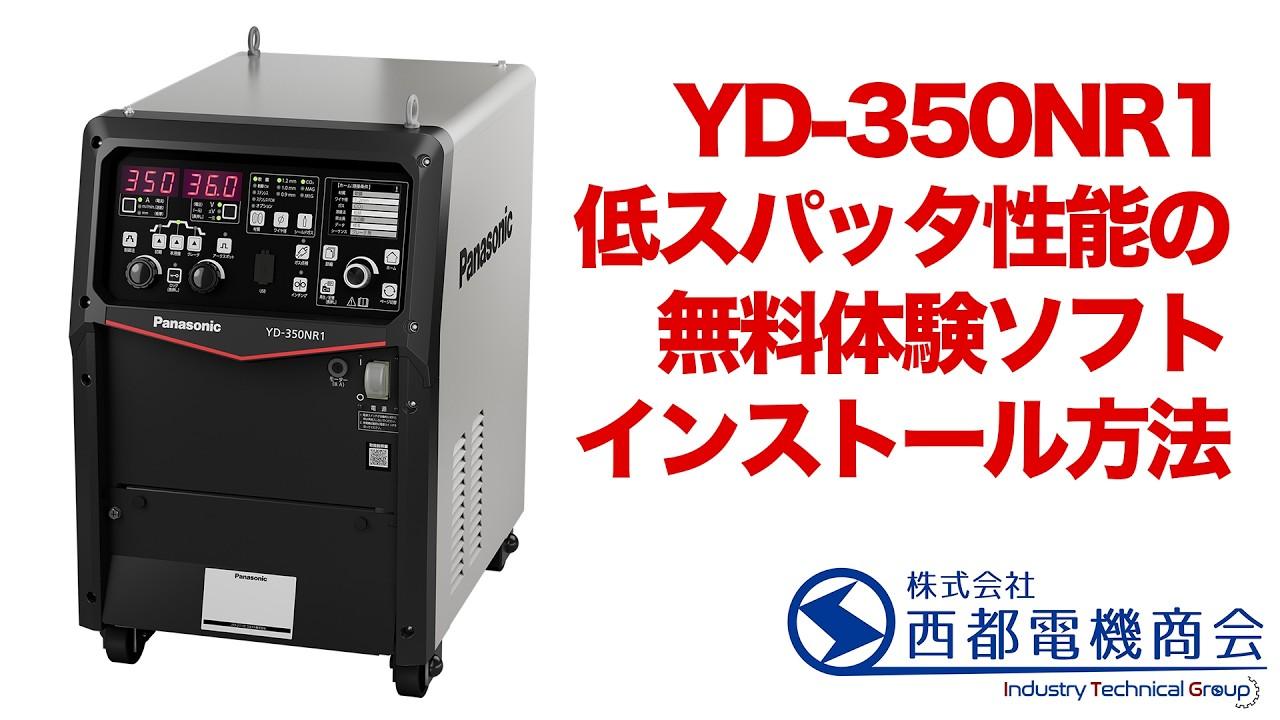
Panasonic YD-350NR1 vs Daihen Welbee Short Arc 350: the sensing-lead-free low-spatter mode both makers brought to the Japan International Welding Show, and the three quotes a Pakistani fabricator asks for on Monday
Four days, two makers, one feature. The Japan International Welding Show opened at Tokyo Big Sight yesterday and runs to Saturday, and the thing both Panasonic Connect and Daihen put at the front of their stands is a 350-amp CO₂/MAG power source with a low-spatter mode that no longer needs a voltage-sensing lead clipped to the workpiece. Panasonic's, the YD-350NR1, has been on sale since 12 December 2025. Daihen's, the Welbee The Short Arc 350 "Smart mode", is marked "Coming Soon" on its own exhibit page. That gap is the buying opportunity, and this is how I would price it.
The numbers first, all from the makers' pages. 350 A. Spatter down by up to 81% against Panasonic's current thyristor machine, the YD-350KR2, with the option fitted, measured on the large spatter over 0.5 mm that has to be ground off; that is Panasonic's own figure from its 9 December launch release, and its footnote says the reduction varies with conditions. The low-spatter option, part YX-NWT001, installs from a USB stick, covers CO₂ and MAG with 0.9 and 1.2 mm wire (not 1.0 mm), holds without the sensing lead up to 20 m of cable, and comes with a free trial of 1,800 minutes, thirty hours, at full performance. No price on any page, Japanese or English. No Pakistani distributor named on either maker's site. Those two blanks are the RFQ.
Why this machine and not the robot
This site wrote the top of the ladder twice in a week: FANUC's AI Welding Agent reading the drawing on 11 September, Universal Robots' Gen 7 at the flange on 16 September. Both are capital cases. This is an operating-expense case, and it is the one a Sialkot or Taxila shop actually has on its desk, because the machine it replaces is already there. From Panasonic's product page, in translation:
"The NR1 series is compatible with the peripherals of the previous VR1/GR3 series. When replacing an older machine, just swap the welding power source and it is ready to use."
Read the footnotes before you believe it. VR1 units built before September 2015 cannot use the digital remote; GR3 units get the analogue remote only. So the quote is the power source alone for a post-2015 VR1 shop, and power source plus remote for a GR3 shop. Know which you are before the distributor tells you.
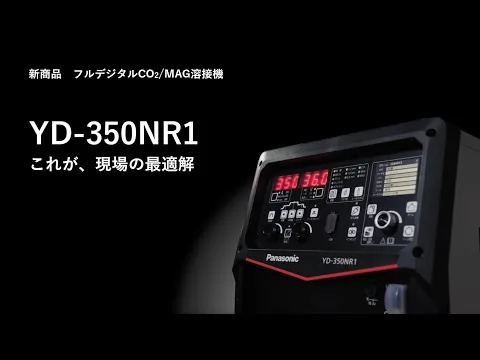
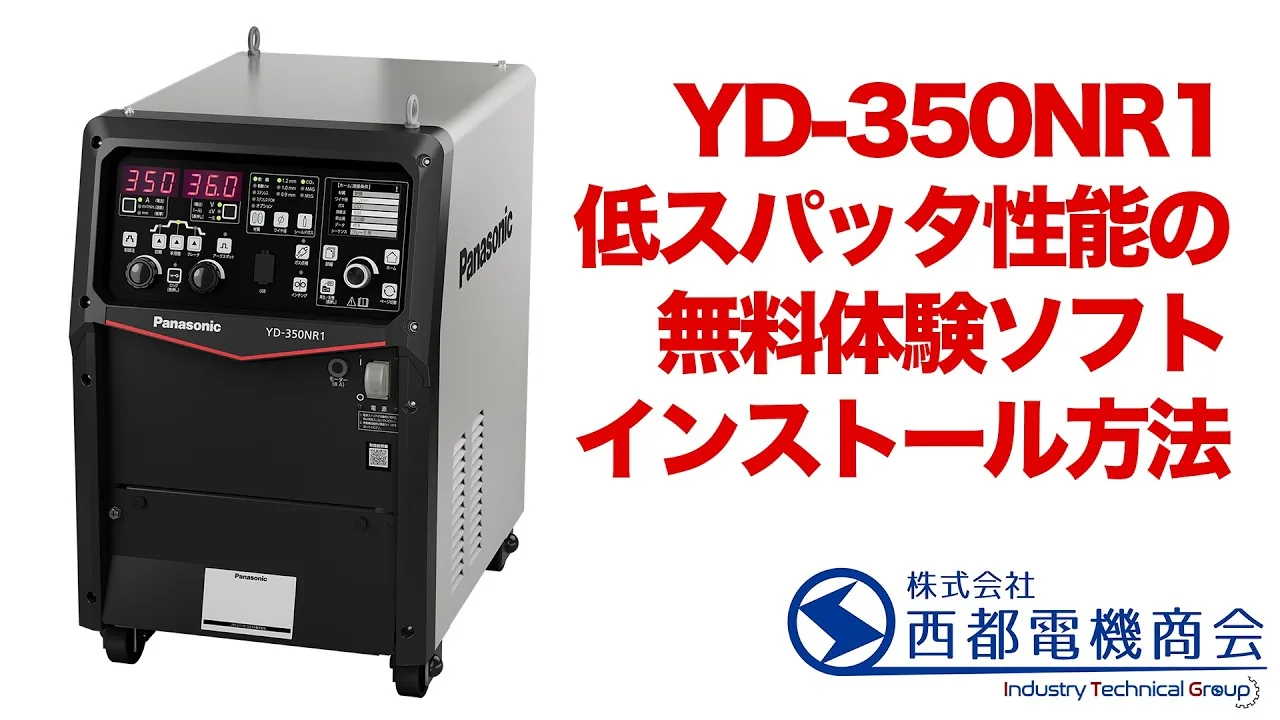
The reason the feature matters is the sensing lead. On a jobbing floor it is the clip that gets left on the last workpiece, dragged through the swarf, or forgotten on the 20-metre run to the other bay, and every time that happens the "low-spatter" machine welds like an ordinary one. Removing it removes a failure mode, not just a wire. A Japanese dealer, 西都電機商会, posted a five-minute walkthrough of loading the free trial three days ago; if your distributor cannot do what is in that video on your floor, that is a finding.
What to ask for on Monday
Three quotes, in this order.
One: the YD-350NR1 power source alone, ex-works and landed Karachi, with the low-spatter option as a separate line. It is a paid option; Panasonic's page says so. Put the thirty-hour trial in the purchase order: the option is not paid for until the trial has run on your wire, your gas and your plate.
Two: the same machine with the CO₂ pulse process, and expect the answer to be no. Panasonic's AXEL-AWP4, built with Kobe Steel and tuned for Kobe's AXELARC wire, runs on the TAWERS WG4 robot, not on the semi-automatic source. For a hand-welding shop the CO₂ pulse story is a robot story for now. Do not let it into the semi-auto quote.
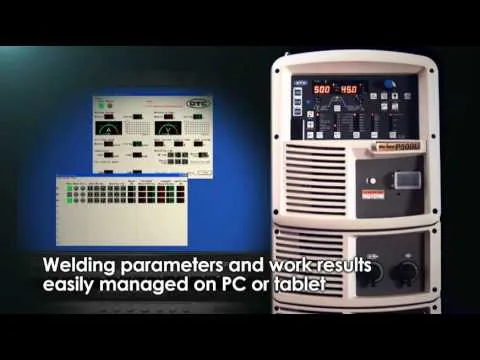
Three: Daihen's Welbee The Short Arc 350, with a delivery date for the Smart mode in writing. Daihen's English exhibit page lists it beside the Short Arc 500 for thick plate and the Welding Monitor for equipment logging; the Smart mode sheet is the one marked "New" and "Coming Soon". A distributor who cannot give a month is quoting a demo. OTC Daihen Asia's own WELBEE SERIE film shows the line's operating idea, and Fineweld Systems in India shows the rung above it, a Welbee P400 on an FD-B6 robot: a separate budget, and next year's.
Two things on the stands are not for sale and should not be in any quote: Panasonic's shop-floor LLM assistant and its wire-arc additive system, both listed as concept exhibits on its JIWS page. Bead Eye M (camera pass/fail on bead appearance), iWNB (browser-based machine monitoring) and ArcNC (CAD to robot program) are products, but they are the ladder's middle rungs and belong in next year's plan.
One number the fair does not give is its own size. No 2026 exhibitor count is published; the comparison on the organiser's past-data page is the 2024 Osaka edition, 345 exhibitors, 103 of them foreign from 20 countries.
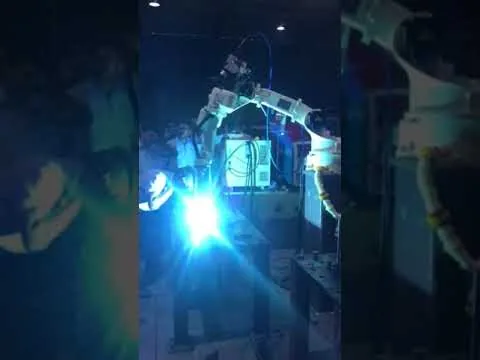
My prediction, and it is mine, not the makers': Daihen's Smart mode will be shipping in Japan before 31 March 2027, and within a month of that a Pakistani distributor will be quoting the Short Arc 350 against the YD-350NR1 on that feature alone. Panasonic has had nine months of the field to itself; Daihen did not print "Coming Soon" on a sheet at its home show to wait a year. So: if you sign for a 350 A Japanese source this quarter, sign for one with the sensing-lead-free mode in the box or on a dated option line. If you can wait until Q2, the second quote will be cheaper than the first. If the Smart mode has not shipped by 31 March, I was wrong.
Sources
- Japan International Welding Show 2026, outline and past-event data, Japan Welding Engineering Society and Sanpo Publications
- Panasonic Connect at JIWS 2026; NR1 series product page; YD-350NR1 launch release, 9 December 2025; AXEL-AWP4, Panasonic Connect
- Japan International Weldingshow 2026 exhibit details, Daihen Corporation
- これが、現場の最適解。YD-350NR1リリース。, Panasonic Welding
- Introducing the YD-350NR1: Low-Spatter Performance Free Trial Software and Installation Guide, 西都電機商会
- WELBEE SERIE_OTC DAIHEN Asia, OTC DAIHEN Asia
- Fineweld Systems- OTC Daihen Ready to Use Robots. Model FD-B6 with Welbee P400 Power Source., Fineweld Systems India Private Limited
- Earlier on this site: FANUC's AI Welding Agent (11 Sept), Universal Robots Gen 7 explained (16 Sept)