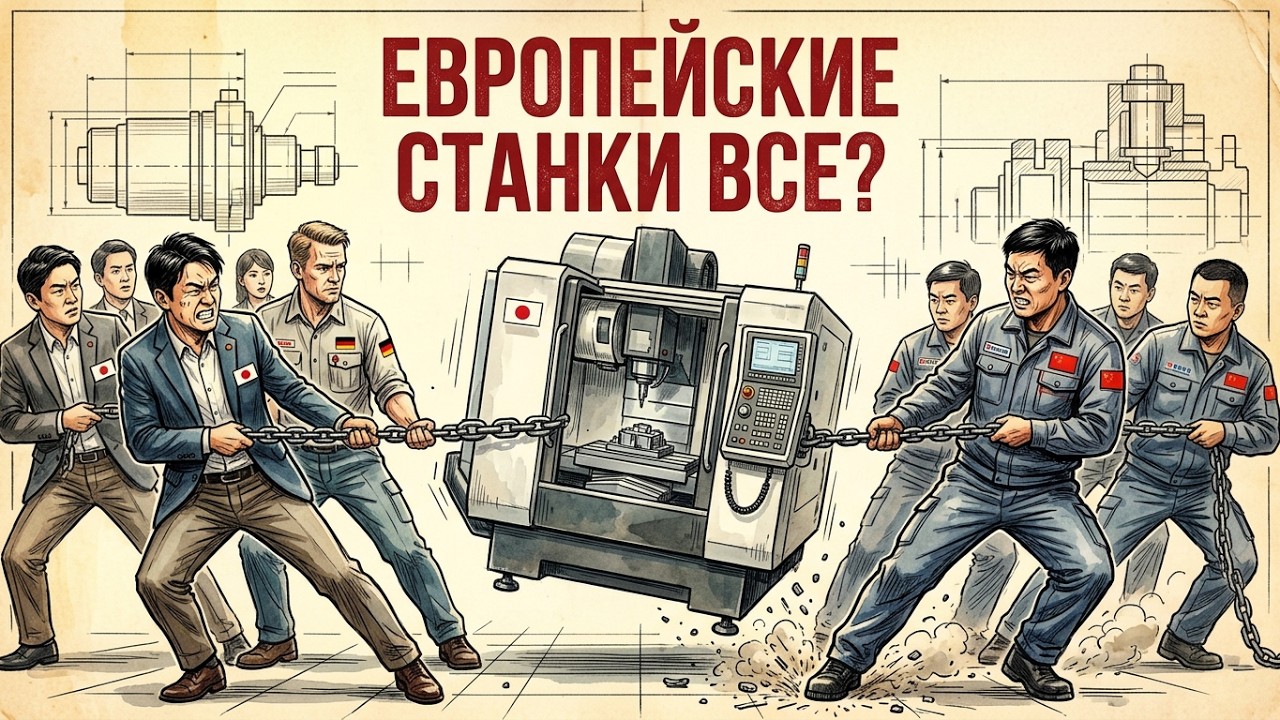
China now exports more machine tools than Germany: what the VDW 2025 figures change on your shop floor
China exported €8.6 billion of machine tools in 2025 and Germany exported €7.0 billion, which is the first time in the history of the trade that the order has gone that way. The VDW published those figures on 18 March 2026, and every trade outlet ran the headline. Almost none of them said what it means for a shop that has to quote a job on Monday.
So here is the version written from the machine, not from the league table.
The figures, and the one everybody skipped
Take the numbers off the VDW release directly, because the second-hand versions have been blending two different measurements. Export share and production share are not the same thing about the same country.
| VDW, full-year 2025 | China | Germany | Japan |
|---|---|---|---|
| Machine tool exports | €8.6bn (+13%) | €7.0bn (−10%) | — |
| Production (machines, excl. parts) | ~€30bn, a record | €9.4bn | — |
| Share of world production | 37% | 12% | 10% |
| Domestic market (consumption) | €25.2bn (+5%), ~32% of world | 5.7% share | — |
Global machine tool exports were about €41.4 billion in 2025, roughly 3% below 2024. China grew 13% into a market that shrank. That is the whole story in one line.
The figure nobody quoted is €25.2 billion — China's own consumption, about a third of everything bought worldwide. China produces around €30bn and exports €8.6bn of it. The overwhelming majority of what those factories build never leaves the country. The export crown was won with the surplus. That matters to you because a builder whose home market absorbs three quarters of his output is not chasing your order, and a builder in that position prices for volume, not for a relationship.
What you are buying is not the casting
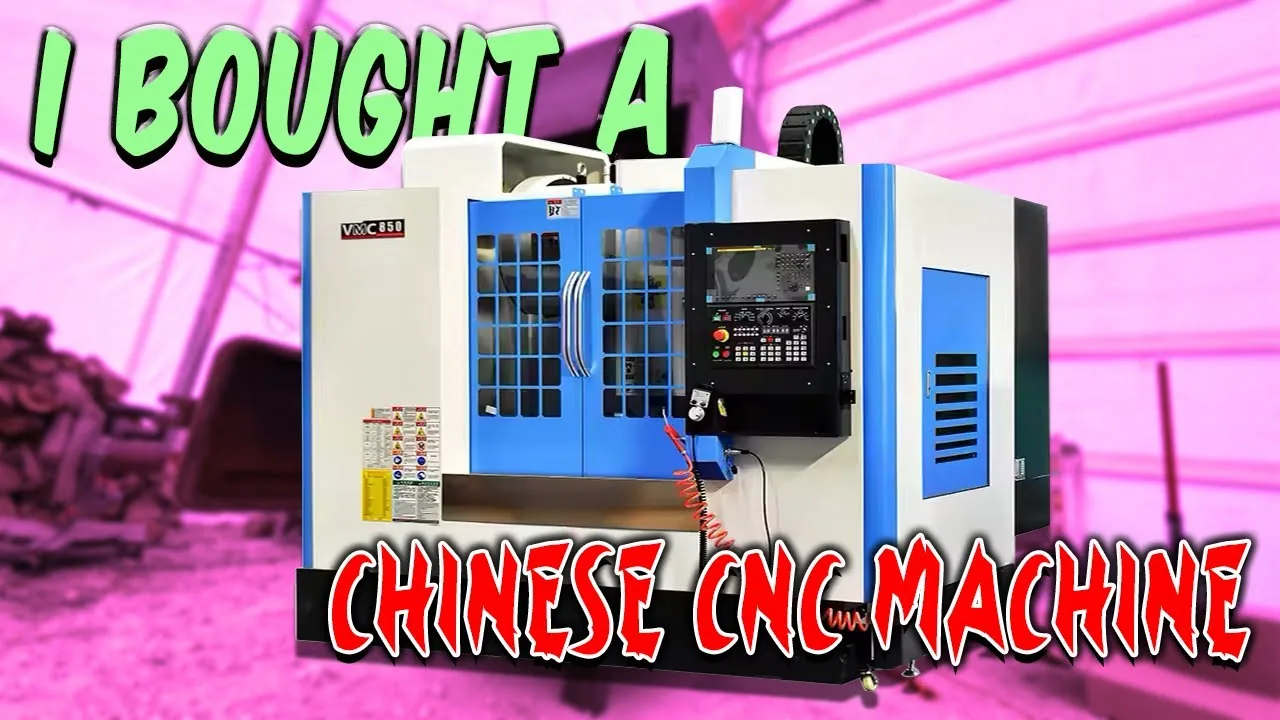
The cheap machine and the expensive machine now come out of the same industrial base, and increasingly out of the same component suppliers. Iron is iron. A Chinese-built vertical machining centre in 2026 will usually arrive with a spindle, linear guideways, ballscrews and a control that you could name individually, and several of those names will be the same ones bolted into a machine costing three times as much.
The difference is not in the parts list. It is in three things the parts list does not show: how well the base was stress-relieved and how long it sat before machining, how carefully the scraping and alignment were done at final assembly, and whether anybody actually ran a ballbar on it before it was crated.
That is why two machines with identical specification sheets behave differently at month eighteen. Both cut a good circle on day one. One of them still cuts it after the shop has gone through two Taxila summers without air conditioning and a few thousand hours of interrupted cut in mild steel. Ask for the acceptance test data. A builder who tests to ISO 230-2 and hands you the printout is telling you something about the assembly floor, not just about the machine.
The control is the decision you cannot undo
Everything else on the machine can be replaced. Spindles get rebuilt, ballscrews get replaced, a servo motor is a purchase order. The control is different, because the control is what your programmers know, what your post-processor was written for, and what determines whether a fault at 2am is a forty-minute fix or a three-week wait.
This is where the export figure and the shop floor meet. A machine sold into Pakistan by a builder whose home market takes three quarters of his production has a support chain that was built for that home market. That is not a criticism of the machine. It is a fact about the distance between you and the person who knows why the axis is alarming.
The practical test, and I would put this in writing before signing anything: which control, which exact version, who in this country holds parts for it, and what is the quoted lead time on a spindle drive. If the answer to the third question is "we order from the factory", price that into the machine. Two weeks of a machining centre standing idle is not an abstraction; it is the job you had to sub out and the customer who found out his other supplier was fine.
Germany did not lose because it got worse
The tempting read on €7.0 billion, down 10%, is decline. The VDW's own data says something narrower. German incoming orders fell 3% across 2025, but that hides a split: international orders were up 3%, and domestic orders fell 16%. The German machine tool industry did not lose the world. It lost its own customers, and its own customers are the German car industry and its suppliers.
The fourth quarter turned: orders up 4% year on year. VDW managing director Dr. Markus Heering attributes the recovery not to automotive or general engineering but to electronics and semiconductors, which he ties to digitalisation, the AI boom and the global build-out of data centres.
That is the part worth stealing for your own planning. The demand that is growing is not the demand a general job shop is set up for. It is tight-tolerance, small-batch, often exotic-material work feeding electronics and semiconductor supply chains. Whoever tools up for that gets the growth. Whoever waits for automotive volumes to come back is waiting on the segment that just fell 16% in its home market.
What I would actually do
Buy on support, not on the badge, and stop treating country of origin as a proxy for quality — it stopped being one somewhere around the time China's production hit 37% of world output. The real questions are the boring ones. Get the acceptance test data. Name the control and check who holds spares for it inside Pakistan. Get the spindle lead time in writing. Ask what the machine was doing during its first 500 hours at the factory.
And be honest about the work you are quoting. If your parts are ±0.1 mm brackets in mild steel, a machine built for the Chinese domestic market will cut them all day and the money you saved is real money. If you are chasing the tight-tolerance electronics work that is where the growth actually is, the acceptance test data stops being paperwork and starts being the whole decision.
The export crown changed hands. What did not change is that a machine is only worth what it can hold, three years in, on the third shift.
Sources
- VDW (German Machine Tool Builders' Association), German machine tool industry leveling off – China further dominating production, 18 March 2026 — the source of every figure in the table, the €41.4bn global export total, the order-book split and the Heering quotation.
- The Shocking Truth About CHINESE CNC Machines! Japanese and Germans Are No Longer on TOP! by Веселый инженер — машиностроение и технологии — used as evidence of how the VDW result is circulating in the machining community. Its published summary was read; the video itself is not quoted.
- I Bought A Cheap Chinese CNC Machine … Worth IT? by Precision Metal — cited for the question it puts and the audience it reaches.
- What CNC should I buy by CNC Repairman — background on how buying advice is framed for small shops.
Vesprr Workshop runs CNC machining, fabrication and finishing out of Taxila. If you have a drawing and a tolerance you are not sure anybody local can hold, send it over and ask for a quote — tell us the material, the quantity and the date you need it, and we will tell you straight whether it is a job for us.