Alphabet's open machine tending template shipped yesterday: the five-stage CNC cycle, and the door interlock that decides whether your machine can run it
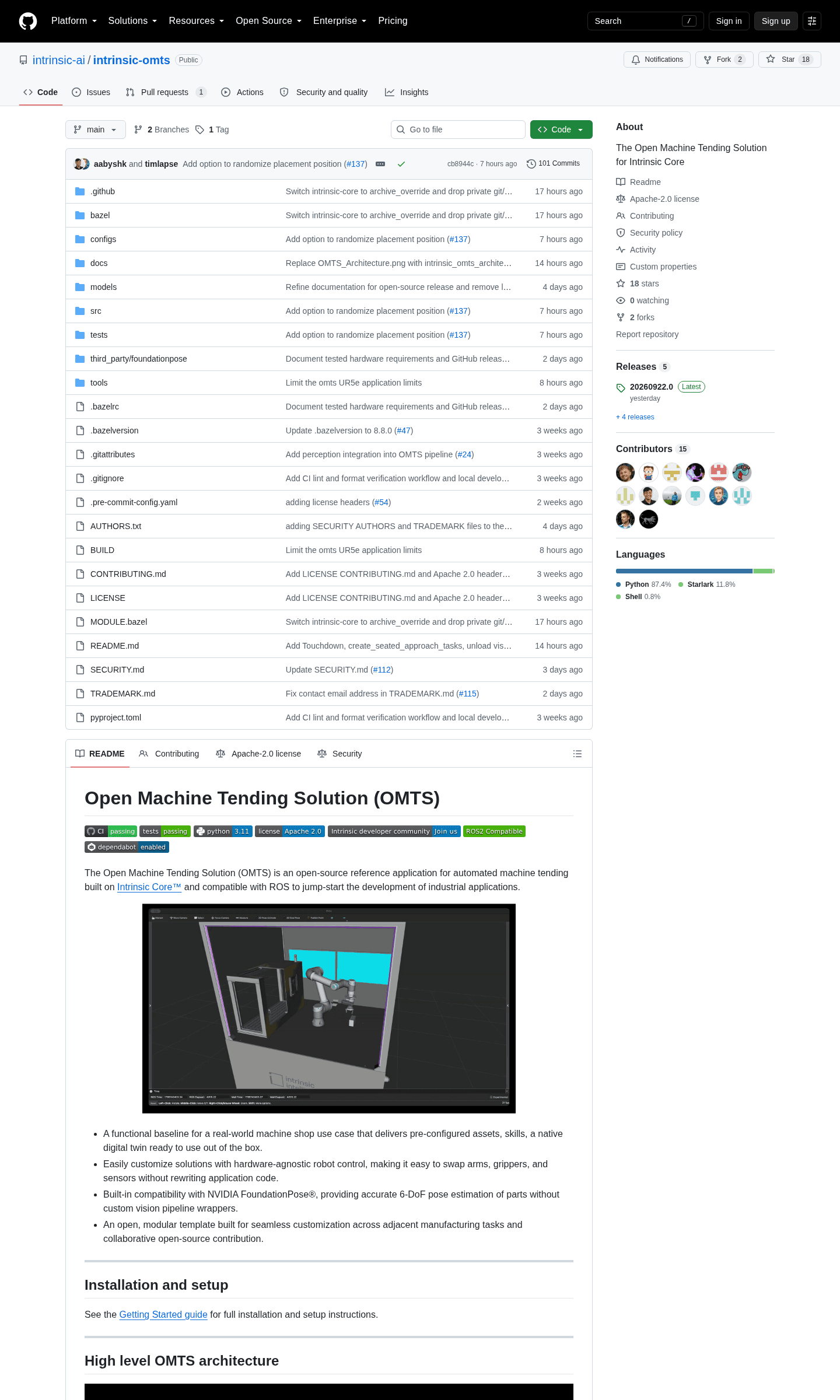
At 04:42 UTC yesterday, 22 September, a repository belonging to Alphabet's robotics company cut its first and only tagged release.
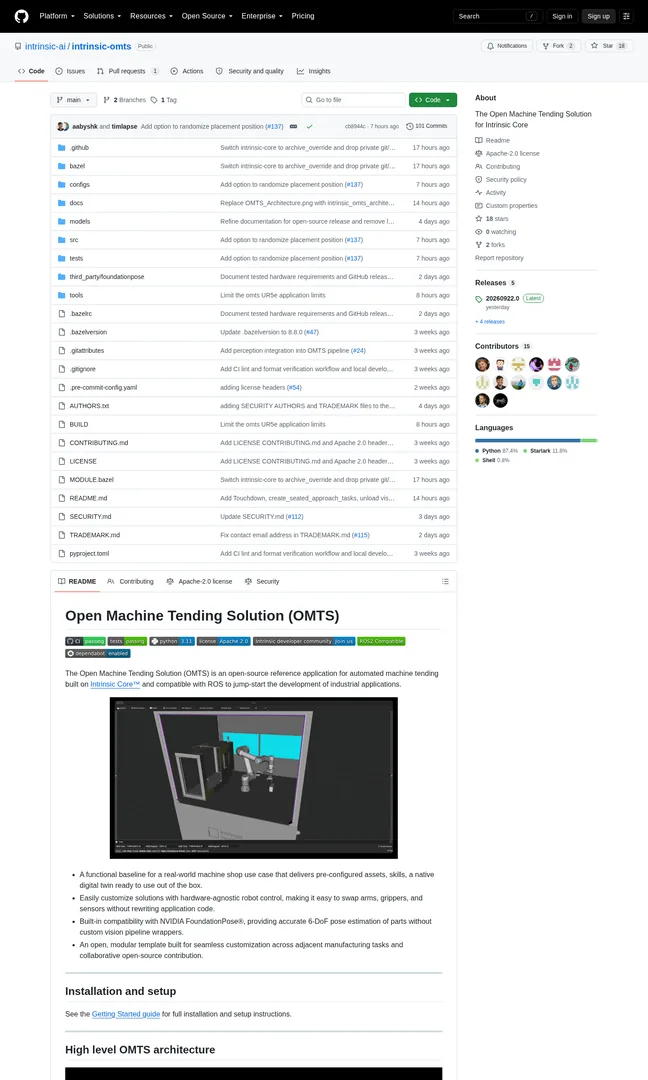
It is called the Open Machine Tending Solution. Eighteen stars, two forks, Apache-2.0, Python 3.11. Last code push 22:46 UTC the same night.
Behind the version number is a complete, readable description of a robot loading a CNC machine — the job most machine shops automate first, written down stage by stage so anyone can check it.
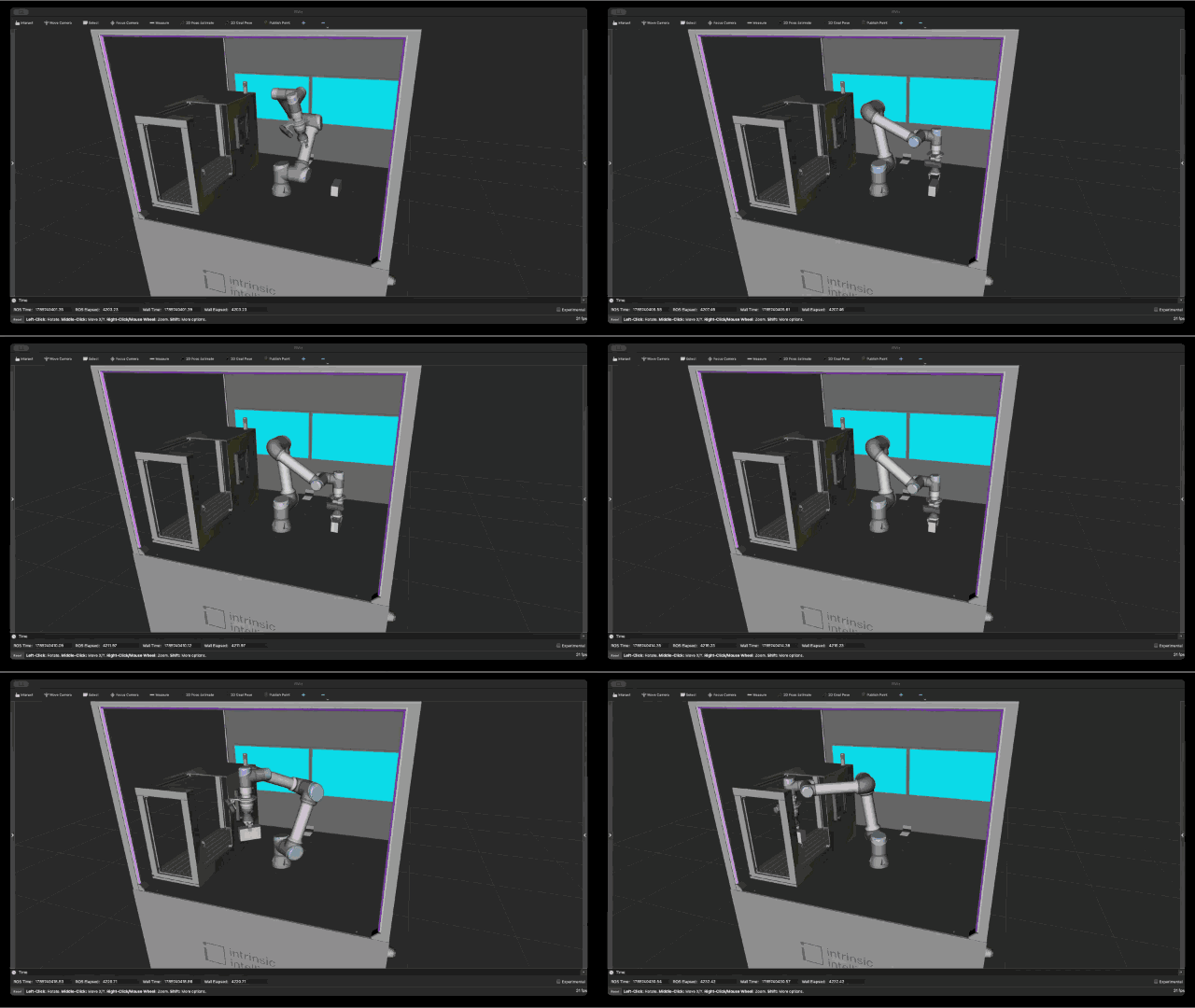
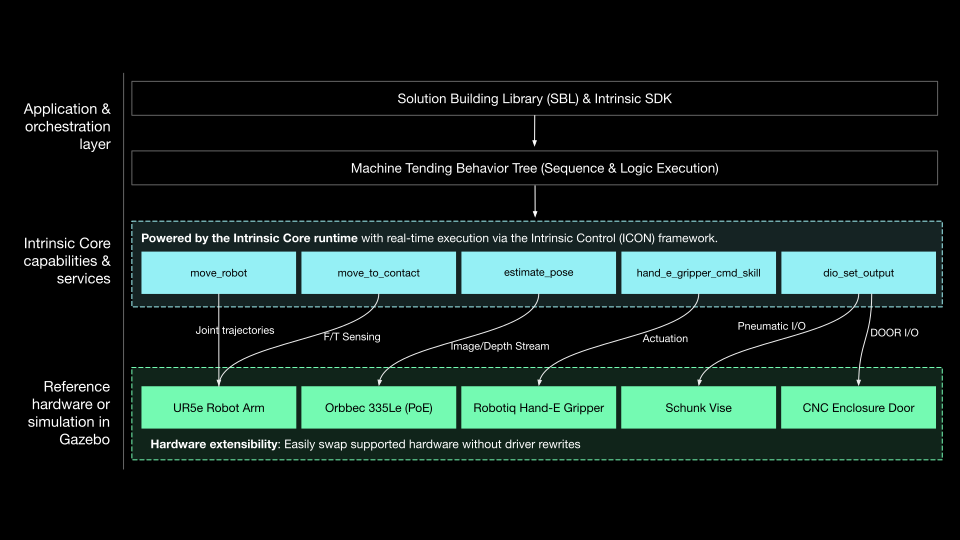
The cycle has five stages and the repository names the source file for each. Open the door and the vise. Move to a view frame. Photograph the part in RGB-D and work out its position in six degrees of freedom. Open the gripper, touch down under force control, retract 3 cm, grasp.
Then load: approach the machine, seat the part into the vise under compliant motion, clamp, let go, retract in a straight line out of the enclosure.
Then the handshake: arm to a safe standby position, close the door, pulse cycle start, wait for completion.
Then unload, and return the finished part to the infeed table. The whole sequence sits inside a behaviour-tree loop that runs once, a set number of times, or continuously.
Now the line that decides whether any of it is possible on your machine.
One of the five skills is dio_set_output. The README says it "toggles digital outputs on the I/O controller to automate external hardware signals, such as commanding the CNC machine door to open/close and actuating the vise clamp."
That is the whole feasibility question in one sentence. The design assumes your machine will open its own door on a digital output, clamp its own vise on another, and take a cycle-start pulse from outside. A great many machines in Taxila and Gujranwala will not do any of the three without an aftermarket door actuator, a pneumatic vise and an M-code wired out to a relay board.
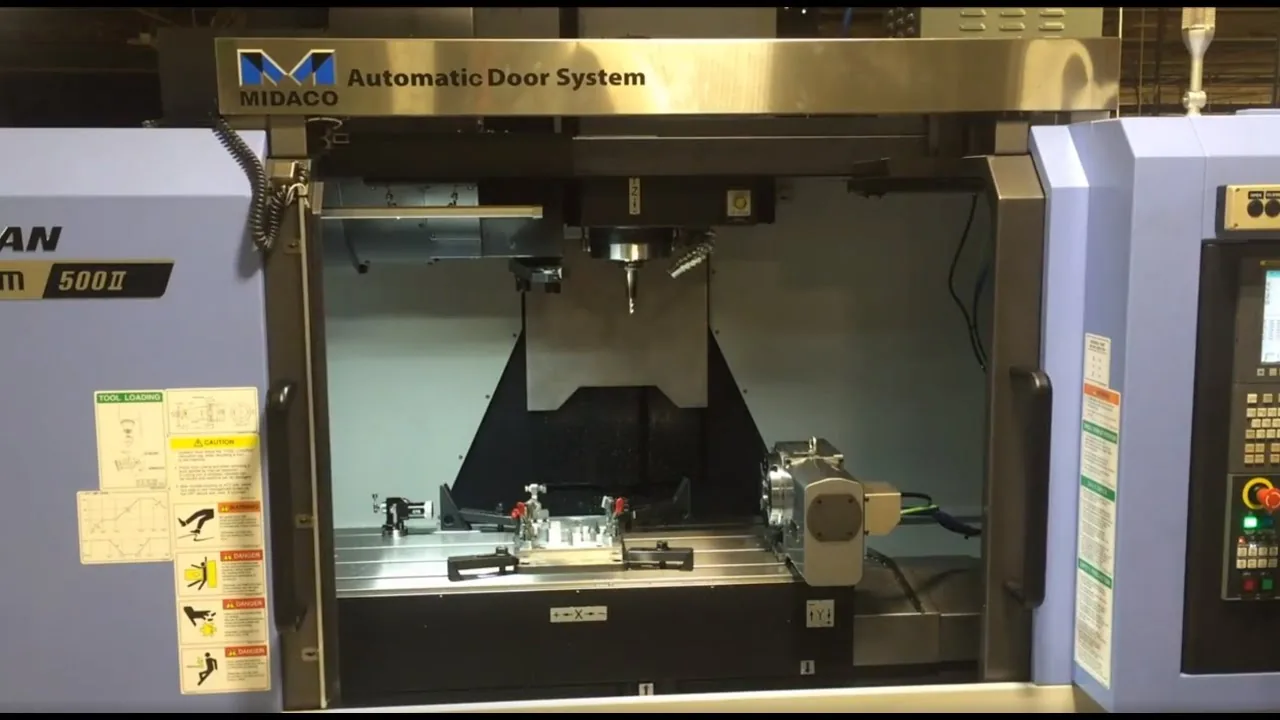
None of that is exotic. It is also not free, and it is not in the repository. Midaco has been selling an automatic door for exactly this purpose long enough that its own demonstration video is eight years old.
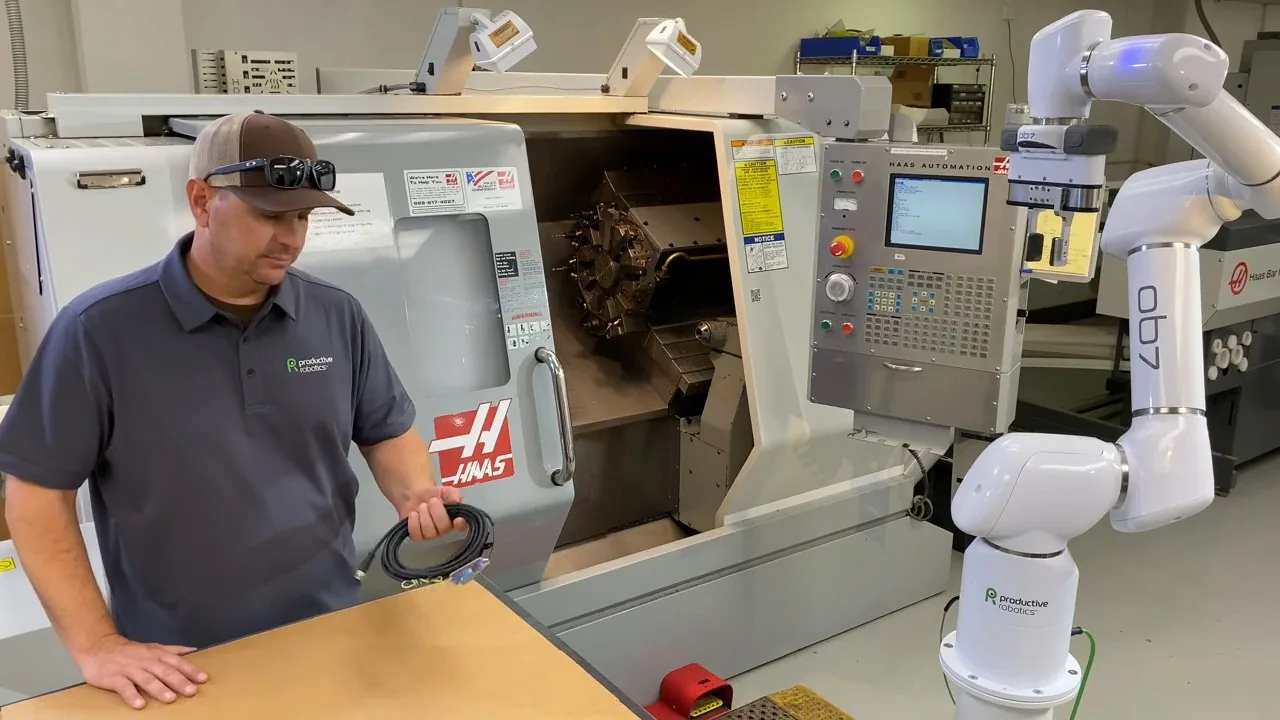
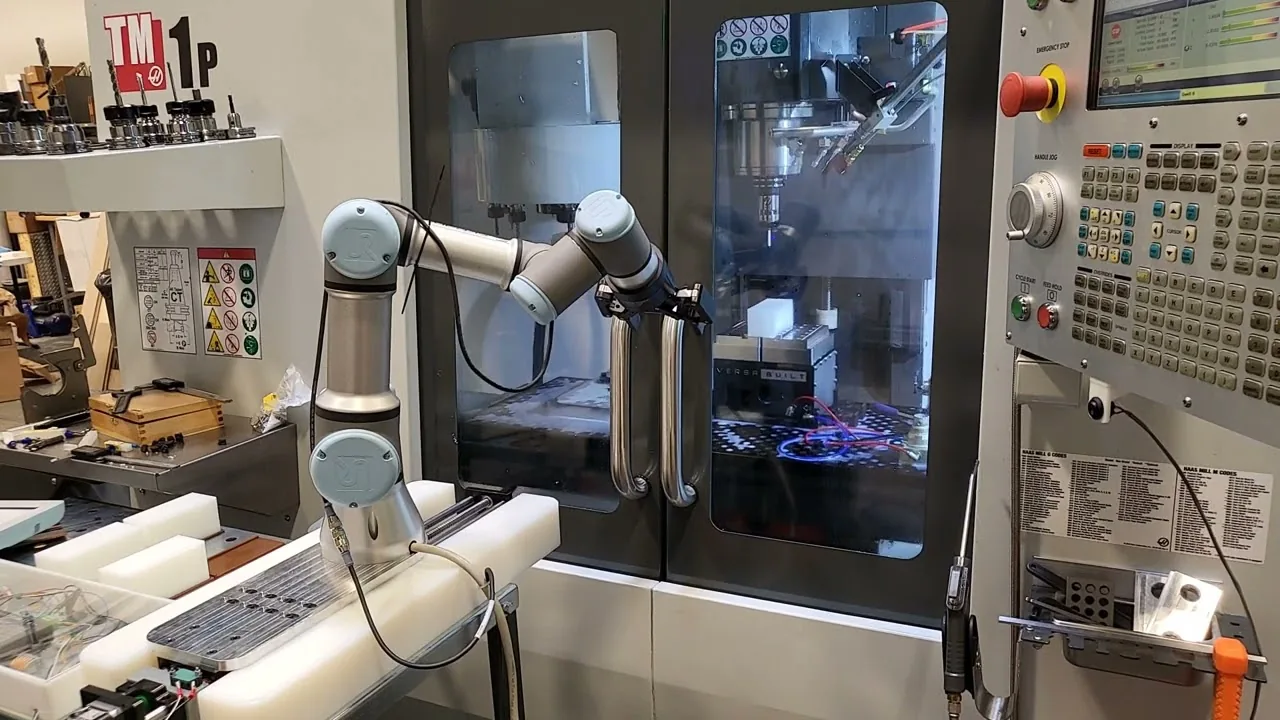
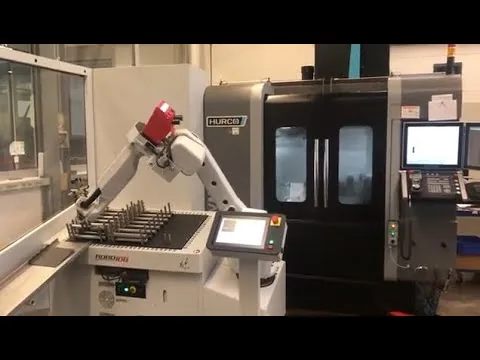
Cobot-and-CNC integration is a decade-old trade. What is new here is that the sequence is written down in public, with file names, and you can argue with it before you buy anything.
The second decision the repository makes for you is how the robot finds the part. There are two strategies. Vision-guided pick uses a 3D camera and pose estimation for parts lying where they fall. Blind grid pick uses row-and-column arithmetic on a pallet.
Fixture your parts into a tray and the camera is optional. Tip them into a bin and it is not. That is a fixturing bill against a vision bill, and it is the cheapest decision to get right early.
Now what the announcement does not say.
It names no cycle time, no payload, no repeatability figure and no shop that has run it. The production cell in the configuration folder is a UR5e with a CNC enclosure and a Schunk vise; the lab cell is a UR3e with no CNC at all; the KUKA KR10 folder is labelled a placeholder. Cobot payloads and small parts, in other words — not a pallet of castings.
It puts no price on the computer either, though it specifies one: x86-64 only, 32 GiB of RAM minimum and 64 recommended, a 1 TB NVMe drive, two or three gigabit Ethernet ports, an RTX 3060 or 4060 class card "strongly recommended". A workstation standing next to the machine.
And the licence is not as simple as the badge. The code is Apache-2.0. The FoundationPose weights that make vision-guided pick work are neither in the repository nor covered by it — they download from NVIDIA under the NVIDIA Open Model License, and the README says plainly that Intrinsic does not distribute them. Read that paragraph twice before signing an open-source clause with a European customer.
The same company put an AI welding agent out with Google on 11 September, which we covered here — a very different licence from this one. The robot in the production cell is from the family we looked at on 16 September.
My read, and it is a judgement rather than a source: the gate on this is the door, not the software. I expect intrinsic-omts to have cut at least one more tagged release by 31 October — the push rate says an active team — and the KUKA KR10 folder to still say "placeholder" on that date, because industrial-arm support is the expensive part and cobots are where this is aimed. If a KUKA or FANUC cell config lands as a working configuration before Hallowe'en, I have read the direction of this project wrong.
Before you cost a cell: go to the machine, find out whether the door can be opened by a signal and the cycle started by one. That is a fifteen-minute question and it decides everything after it.
Sources
- intrinsic-ai/intrinsic-omts — repository, README and release 20260922.0, read 23 September 2026.
- intrinsic-ai/intrinsic-core — the runtime and control framework OMTS is built on.
- MIDACO AutoDoor for CNC Automation — Robot and Cobot Access by Midaco Corporation.
- Overview | Connecting an OB7 cobot to your CNC by Productive Robotics.
- UR3 + Haas Integrated Control — First Load by Big T's Chop Shop.
- CNC Automation — Hurco VMX30i, Mill-Assist Essential by RoboJob Inc.